

Gov. Phil Murphy declared a State of Emergency this afternoon as Hurricane Erin sits about 300 miles off the East Coast. Though the Category 2 storm will not make landfall, there will be coastal and flash flooding (possibly 3 feet of water in flood-prone areas), dangerous surf and large breaking waves (as high as 17 feet), and winds of up to 50 mph.. The notice applies to all 21 counties in the state, and extends for 24 hours through tomorrow.
Rip currents and rough surf have been affecting the Jersey Shore all week – which is even more serious considering two people drowned in NJ in the last week due to rip currents.
Here’s what to know about rip currents and water safety, according to the U.S. Department of Commerce National Oceanic and Atmospheric Administration (NOAA):
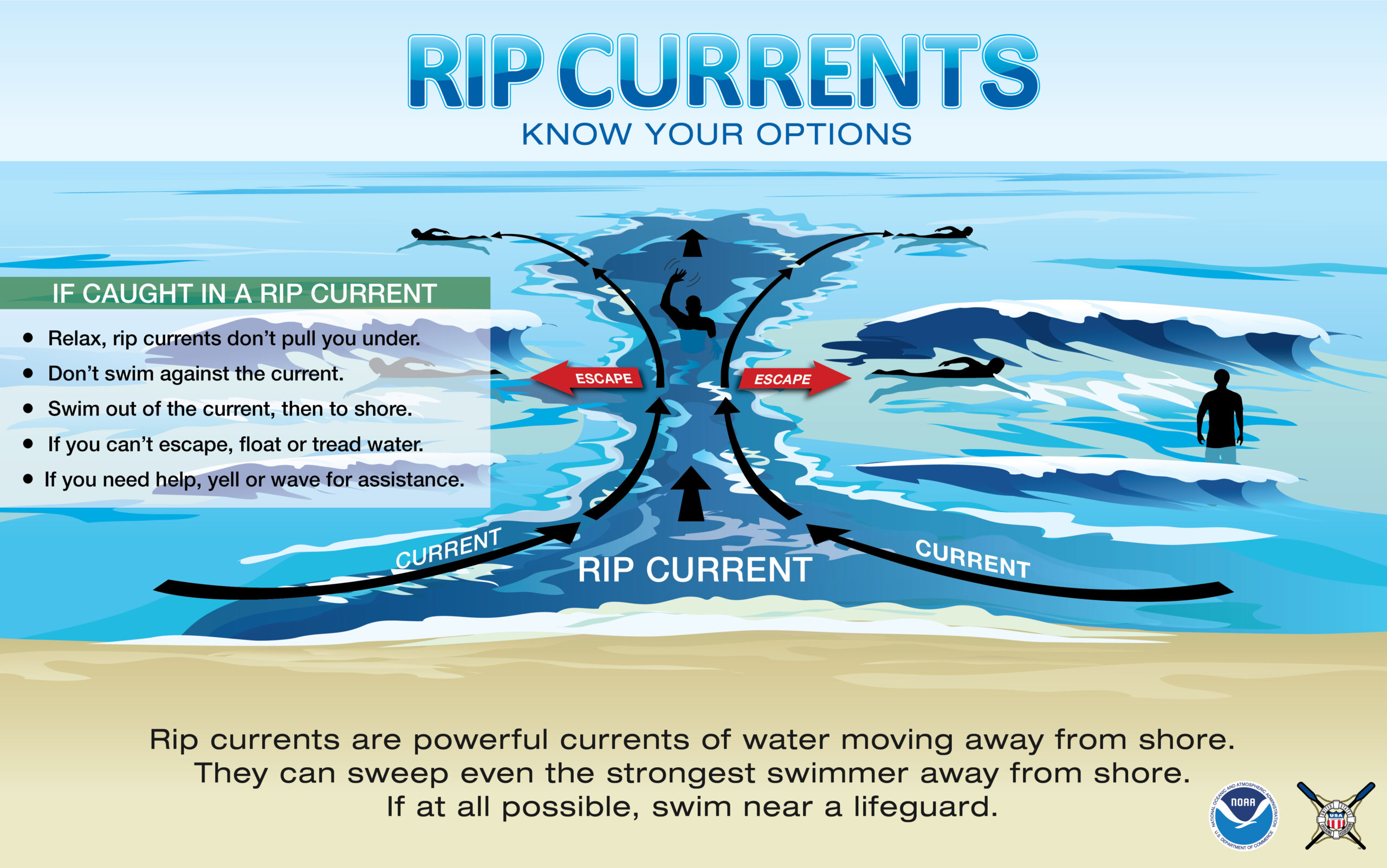
- Rip currents are powerful currents of water flowing away from shore. They most commonly form at low spots or breaks in sandbars and near structures such as groins, jetties and piers.
- You can identify a rip current by a calmer, darker section of the water that is surrounded by breaking waves or whitecaps. The water may look murky due to debris or seaweed being churned up.
- Rip currents are not an undertow – they do not pull you under. They also are not a rip tide, because they are not affected by the tide. They are usually weather- or wind-related, and can occur randomly.
- Rip currents can be very narrow or be hundreds of yards wide. They can move at speeds of up to 8 feet per second.
- Rip currents are the leading cause of rescues for people in the surf, accounting for over 80 percent of rescues performed lifeguards. They are particularly dangerous for weak or non-swimmers, but a strong rip is a hazard for even experienced swimmers.
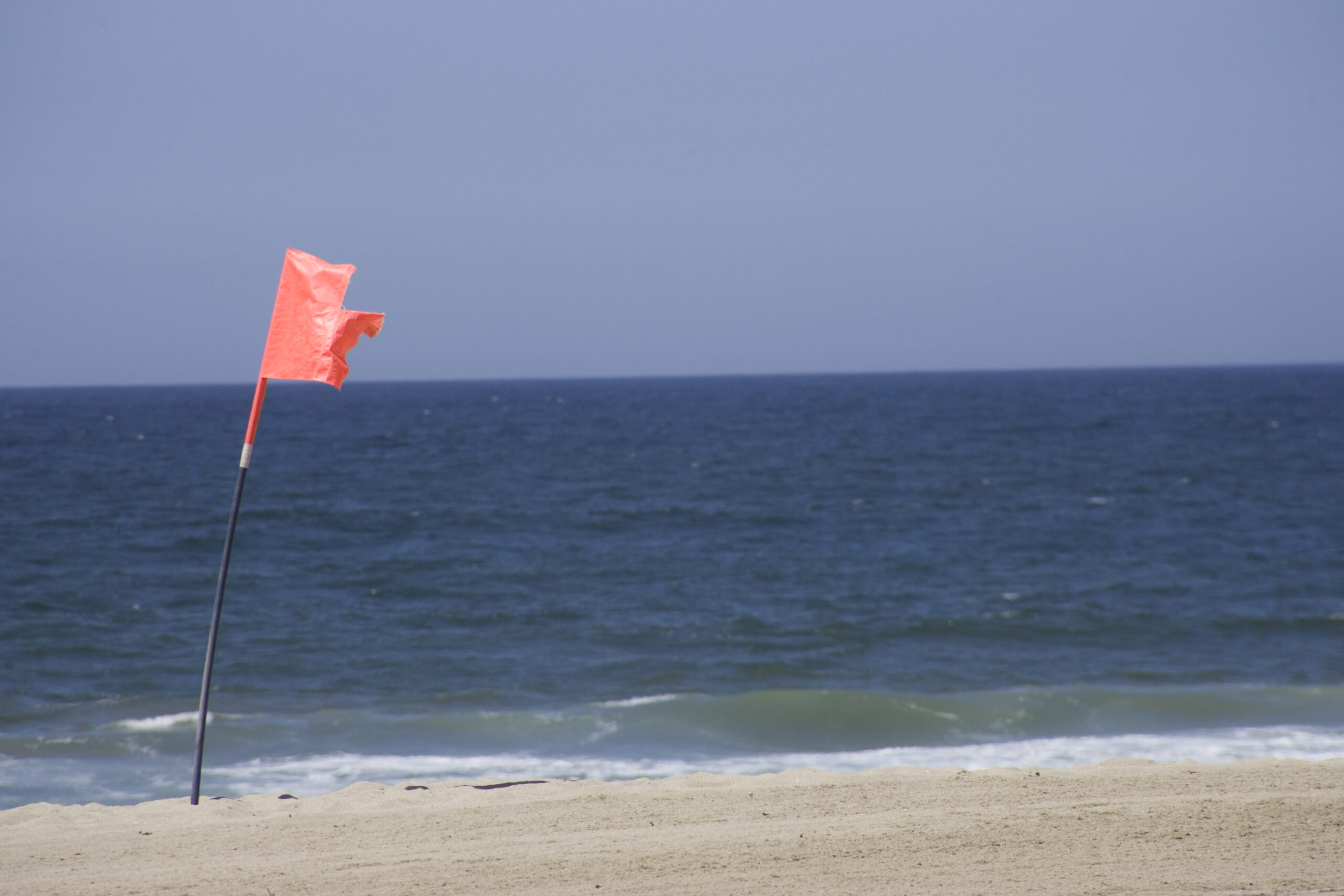
- Do not swim if lifeguards are off-duty, if there are yellow or red warning flags, or if a storm is approaching.
- The most important thing to do if you are caught in a rip current is to not panic, because this will make you more tired. Try to swim parallel to the shore so you reach the end of the rip, or at least tread water and stay afloat. Do not swim toward the shoreline. Wave or call for assistance.
- Drowning deaths occur when people, pulled away from the shoreline, are unable to keep themselves afloat. The United States Lifesaving Association estimates that the annual number of deaths due to rip currents throughout the country (the oceans and Gulf of America beaches, plus the Great Lakes) exceeds 100.
- There have been 27 surf zone fatalities due to rip currents in the U.S. so far in 2025, according to the National Weather Service. On Friday evening, a 13-year-old was pulled from the water near Seventh Avenue beach in Belmar. On August 11, one man died and six others needed to be rescued in Seaside Heights. In both cases, it was after the lifeguards had left for the day; in response, Seaside Heights is enforcing the prohibition of swimming after-hours.
So far, 18 beaches along the Jersey Shore have restricted beach access and/or prohibited swimming. Beachgoers should check the warning flags along the shoreline and stay out of any red zones.
Jenkinson’s Boardwalk closed its beach access, and canceled Movies on the Beach on Wednesday and Princess Palooza & Princess Dining on Friday. The boardwalk, arcades, aquarium and amusement park are open until further notice.
Resources
For updates on Hurricane Erin, visit the National Hurricane Center, part of the U.S. Department of Commerce National Oceanic and Atmospheric Administration.
Visit ready.nj.gov for important weather updates and safety information for New Jersey specifically.
For those living along the shore, visit the New Jersey Office of Emergency Management’s Evacuation Routes webpage.
For those living in Northern New Jersey and the New York Metro area, visit the U.S. National Weather Service New York, NY.
For those living in Central and Southern New Jersey, visit the U.S. National Weather Service Philadelphia/Mount Holly.
Get the latest on the best things to do with your family in and around New Jersey by signing up for our newsletter and following us on Pinterest, Facebook and Instagram!
Read More:
When Lightning Strikes: How to Keep Safe During a Storm
5 Water Safety Tips to Prep the Kids For Summer
I Took a Learn-to-Sail Trip with My Son – Here’s Why We Need More Adventures
Popular Now:
What Swimmers Need to Know About Rip Currents at the Jersey Shore
Homes in These 3 NJ Towns Are Among the Nation’s Hottest Zip Codes
How to Hit the Jersey Shore Like a Local
New Jersey Ranked 3rd Best State to Live in for 2025! Do You Agree?
New Jersey’s 3 Best “Bougie-on-a-Budget” Vacation Spots, According to Survey
What Are the Best Public Colleges in NJ According to Money Magazine?
NJ Public Schools Just Ranked 3rd Best in the Country, According to New Ranking
These 2 NJ Downtowns Were Just Named Among the Most Walkable in the U.S.
Townsizing Is the New Travel Buzzword—And Cape May’s at the Top of the List
A School in New Jersey Has Been Named One of the Most Innovative in The World

