

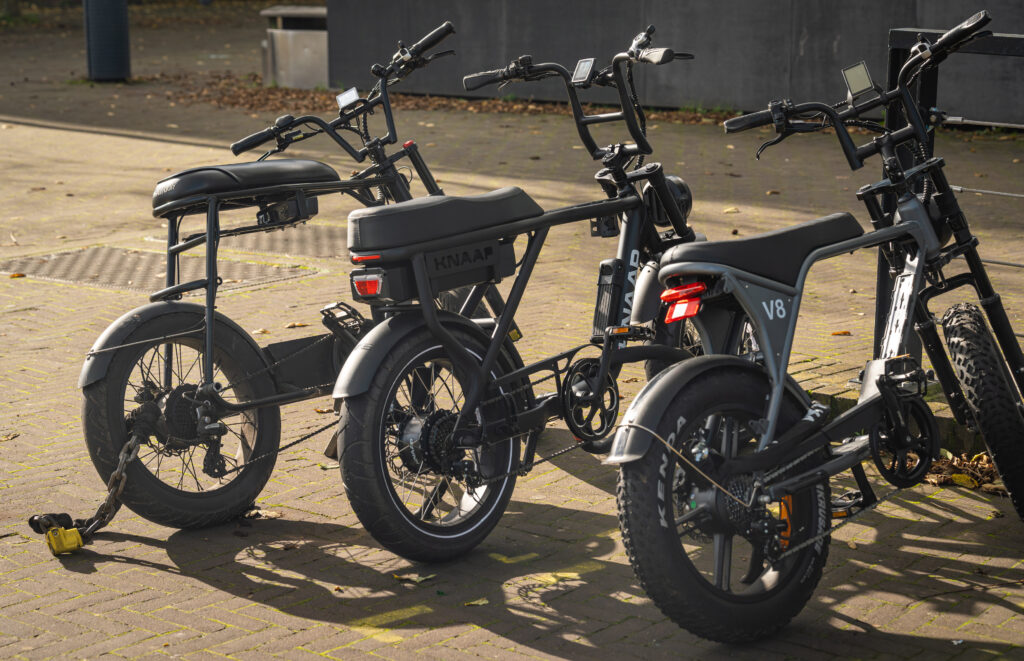
As e-bikes have grown in popularity, injuries have climbed, too. The American College of Surgeons reports that a growing number of pediatric trauma centers now identify e-bikes as the leading cause of injury among school-aged kids who come into the ER.
Recent tragedies have brought the issue of e-bike safety front and center in New Jersey. Last month, 16-year-old Chase Sudano was killed in a Burlington County crash involving an e-bike and a UPS truck. Last September, 13-year-old Nico Lombardi died after his e-bike collided with a landscaping truck in Scotch Plains.
New Jersey’s New E-Bike Law
These tragedies and others have resulted in a new e-bike law in New Jersey with much stricter requirements. Approved on January 19, families must meet the law’s new requirements by July 19. The new law requires riders to be at least 15, have either a valid driver’s license or an e-bike/moped license or permit, and register covered e-bikes with the state’s Motor Vehicle Commission. Motorized bicycles are required to have insurance coverage. Low-speed electric bicycles do not require insurance but must still be registered with MVC.
Out-of-state riders bringing their own e-bike into New Jersey still need to follow New Jersey rules. Some rental e-bikes have different rules; MVC rules say riders of certain rented low-speed electric bikes must be at least 16 but do not need a driver’s license or e-bike license. Parents should also check local rules before letting kids ride on sidewalks, boardwalks, trails or in parks, since some areas may have additional restrictions.
Safety Measures
E-bikes look similar to traditional bicycles but have a battery-powered motor that assists pedaling. Some models also have throttles, allowing riders to accelerate without pedaling. These features can make them faster, heavier and harder to maneuver than a regular bike. That means crashes can be more serious, especially when kids are inexperienced, riding without helmets, carrying passengers, distracted by phones or riding in areas not designed for bikes.
In an interview with New Jersey Family last fall, we asked Leigh Ann Von Hagen, executive director of the Alan M. Voorhees Transportation Center at Rutgers University, what teens should do to stay as safe as possible when riding an e-bike.
“Safety isn’t just about wearing a helmet, though in New Jersey, it is the law for anyone 17 and under riding a bike, scooter, skateboard or other wheeled device. Helmets do not prevent crashes; they can only help prevent injuries if worn correctly,” said Hagen, an adjunct professor at the Bloustein School of Planning and Public Policy at Rutgers. “The first step is to make sure the e-bike itself is safe to ride. That means choosing a good-quality bike from a reputable vendor and then doing a quick safety check before every ride. A brief ‘ABC Quick Check’ (Air, Brakes, Chain, Quick releases) can help make sure everything is in working order.”
Here’s a short video that walks through the ABC Quick Check.
We also asked Von Hagen what should be done to make riding e-bikes safer.
“A big part of the solution is safer street design. Communities can protect young riders by slowing traffic, building separated bike infrastructure, and improving trail crossings so drivers see people on bikes,” she said. “On the rider’s side, the basics go a long way. Riders should check their bike’s condition, wear a helmet, follow traffic laws, and ride predictably so drivers know what to expect. That means riding with traffic (even in bike lanes), stopping at lights and stop signs, using hand signals, and obeying speed limits. Parents play a powerful role in teaching these habits early.”
She also said community involvement builds a culture of safety and that drivers have a responsibility to slow down, stay alert, and follow New Jersey’s Safe Passing Law. “When families, municipalities, schools and neighbors work together to create safer conditions, we can protect young riders and prevent future tragedies,” she said.
Parents commenting on New Jersey Family’s Facebook page suggested that NJ schools hold assemblies on e-bike safety or teach e-bike and e-scooter safety in public school classrooms. Others said they believe e-bikes should be banned altogether.
Here are non-negotiable safety rules for e-bike riders:
- Always wear a well-fitted helmet.
- One rider only. E-bikes are not designed for passengers, and doubling up increases the risk of a crash.
- Follow the rules of the road. Stop at lights and stop signs, ride with traffic and use hand signals when turning.
- Be visible. Wear bright colors, use lights at night and don’t assume drivers can see you.
- Build skills first. Teens should master a regular bike before moving to an e-bike.
- Consider waiting until at least age 16 before riding independently.
- Ride defensively. Expect drivers not to see you, and avoid weaving in and out of traffic.
- Stay focused. Don’t use phones, earbuds or anything else that takes attention off the road.
For safety guidance on e-bikes and e-scooters, including battery charging and storage tips, download the National Fire Protection Association’s safety tip sheet.
Get the latest on the best things to do with your family in and around New Jersey by signing up for our newsletter and following us on Facebook and Instagram!
Popular in Parenting:
Should Teens Use AI for Mental Health Advice? What Parents Need to Know
Why Won’t My Teen Leave Their Room?
How to Set Summer Screen Time Rules Without Constant Fighting
How to Create a Summer Routine Your Kids Won’t Fight

