

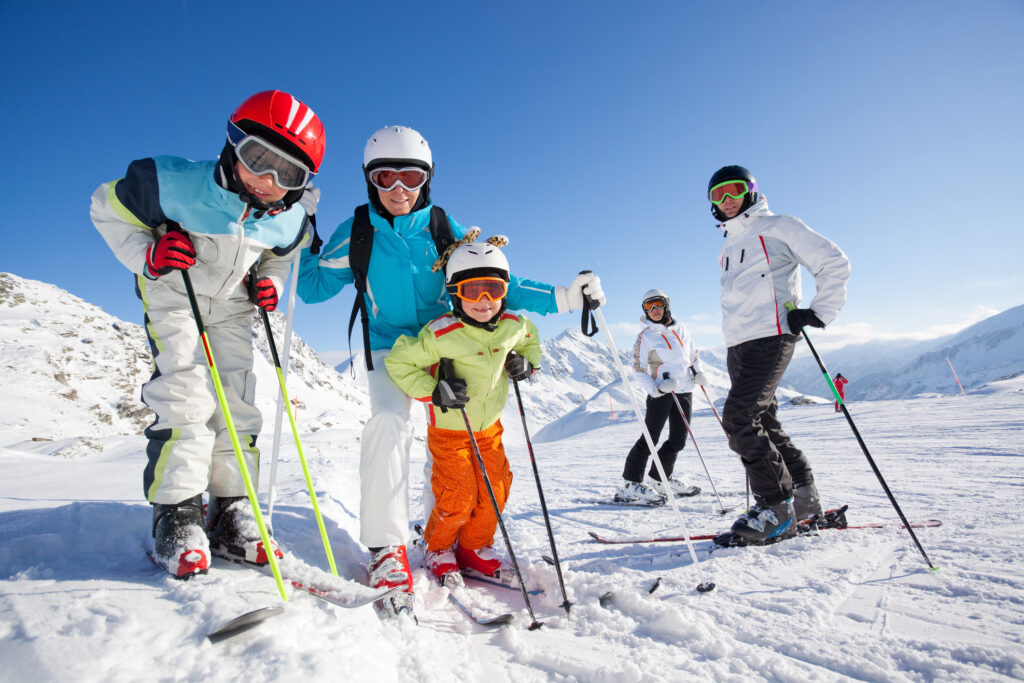
It’s been one of the snowiest winters in recent memory in New Jersey, which has made conditions at area ski resorts especially good this season. Of course, more snow means more families hitting the slopes, and many for the first time. Whether you and the kids are new to skiing or seasoned on the slopes, doctors are sharing some important safety reminders ahead of the long Presidents Day weekend.
We asked Louis Rizio, MD, a fellowship-trained sports medicine specialist and orthopedic surgeon with RWJBarnabas Health Medical Group who is on staff at Cooperman Barnabas Medical Center in Livingston, what parents should watch out for as they head up the mountain this weekend:
New Jersey Family: What common mistakes lead to injuries when kids or teens are learning to ski?
Dr. Louis Rizio: The biggest mistakes are skiing slopes that are too difficult and skipping lessons. Fatigue and poorly fitting gear also increase injury risk. Parents can help by pacing progress, encouraging breaks, and making sure equipment fits correctly.
NJF: What are the most important safety habits to keep in mind for families that ski together?
LR: Ski in control and choose terrain that matches your ability. Follow posted signs, look uphill before stopping or merging, and stay aware of others on the slope. Wear a helmet, use properly fitted equipment, and take regular breaks to avoid fatigue.
NJF: What should families double-check with rental equipment?
LR: Boots should feel snug without pain and have no heel lift. Bindings must be set correctly for each skier’s size and ability. Helmets should sit level, fit snugly, and stay in place when the head moves.
NJF: Are there simple warm-ups that help prevent injuries?
LR: Yes. A few minutes of walking, gentle squats, lunges, arm circles, and light stretching can warm up muscles and joints. Even a short warm-up helps protect knees, wrists, and shoulders.
NJF: How can families recognize fatigue before an injury happens?
LR: Watch for sloppy turns, frequent falls, slower reactions, or complaints of tired or sore legs. When technique breaks down, injury risk rises. Stopping early is often safer than pushing for another run.
NJF: After a fall, what symptoms should never be ignored?
LR: Severe pain, swelling, inability to move or stand, or a joint that looks out of place needs medical care. Head symptoms like headache, dizziness, nausea, or confusion should always be checked, even with a helmet. When in doubt, get evaluated.
NJF: What should families know about knee and ACL injuries?
LR: Knee injuries often happen when a ski catches the snow and twists the leg during a fall. Teens and adults are at higher risk due to speed, but kids can be injured too if bindings don’t release properly. Good technique, proper equipment setup, and knowing when to stop help reduce risk.
Get the latest on the best things to do with your family in and around New Jersey by signing up for our newsletter and following us on Facebook and Instagram!
Read More:
8 Ski Spots to Check Out This Winter
The Best Snow Tubing Spots in Our Area

