


Your child’s neck or back pain may worry you, but the good news is that many common orthopedic complaints in kids are related to bad habits that can be corrected. “This issue is applicable to most of us these days,” says Peter Coulter, PT, DPT, manager of Rehabilitation Services at Cooper University Health Care in Cherry Hill. “We get stuck in these static postures, sitting at a desk or hunching over our phones. Studies show that sustained postures can cause musculoskeletal pain due to tissue overload on muscles, tendons and ligaments.”
While you may have experienced the occasional twinge of back pain yourself, many cases of orthopedic pain nowadays are being seen at earlier ages. “Kids’ neuromuscular systems are still developing so they have reduced tolerance to these kinds of sustained stresses,” says Coulter.
It’s probably no surprise that many issues are tied directly to kids spending hours on their phones. In fact, a 2025 Pew Research Survey found that almost 60 percent of kids ages 11 to 12 have their own phone, so these kinds of complaints aren’t uncommon.
But screen time isn’t the only issue. “Growth spurts often result in rapid bone growth outpacing muscle lengthening, causing tightness and increased risk of tendon pain,” says Chanel Thompson- Rogers, MD, MS, assistant professor of pediatrics at Rutgers New Jersey Medical School in Newark. “This also makes growth plates particularly susceptible to injury from repetitive stress.”
Ahead, learn about the most common orthopedic complaints kids have, as well as how to treat and prevent these conditions:
COMMON ORTHOPEDIC COMPLAINTS
There are a few ways to tell if an orthopedic complaint is habit-related. “If you can reproduce it by doing the activity, if it’s localized or if the pain worsens with the activity in that prolonged position, it’s likely related to a bad habit,” says Coulter.
The most common orthopedic complaints in kids include:
- Neck Pain. Your child may complain of achiness, stiffness or headaches, which is typically related to hunching over the screen in a forward head posture. This increases the cervical spinal load by 3 to 5 times, says Coulter.
- Back Pain. This may be related to poor posture because your child is sitting in a seated position for too long, which increases spinal flexion and results in muscle fatigue and joint stress. It’s also often due to heavy backpacks that increase the load on the spine and increase spinal compression, says Coulter.
- Wrist and Thumb Pain. Holding a phone for a long period of time or repetitive thumb movements from texting or gaming may cause tendon inflammation, which may result in a sharp, burning or achy pain, says Thompson-Rogers.
- Hip Pain. The front of the hip may ache due to shortened hip flexors from sitting in one position for too long, says Coulter.
- Overuse Injuries. These injuries occur from doing the same movement over and over. These pains result because many kids play the same sport all year, which increases overuse injury risk, says Thompson-Rogers.
- Growing Pains. These are pains not related to bad habits, but they’re very common, so it’s worth recognizing the signs. Kids will complain of muscle aches or pain that wakes them at night. These vague, achy pains occur in the legs, calves and thighs, but kids occasionally feel them in the feet or hips, too. If you suspect growing pains, massage, heat and acetaminophen usually relieve the discomfort, says Thompson-Rogers.
ENCOURAGE GOOD HABITS
Here’s how to help your child incorporate good orthopedic habits and ditch the bad ones. Bonus: These tips will work for you, too!
Keep phones at eye level, or use a stand to elevate devices. “This keeps the neck neutral, not in a forward head posture,” says Coulter.
Take frequent breaks to change postures. Staying in one position for too long is a common reason kids experience pain, so encourage them to get up and walk to another room. “They shouldn’t be sitting for two hours straight,” says Thompson-Rogers. Set a timer if it helps.
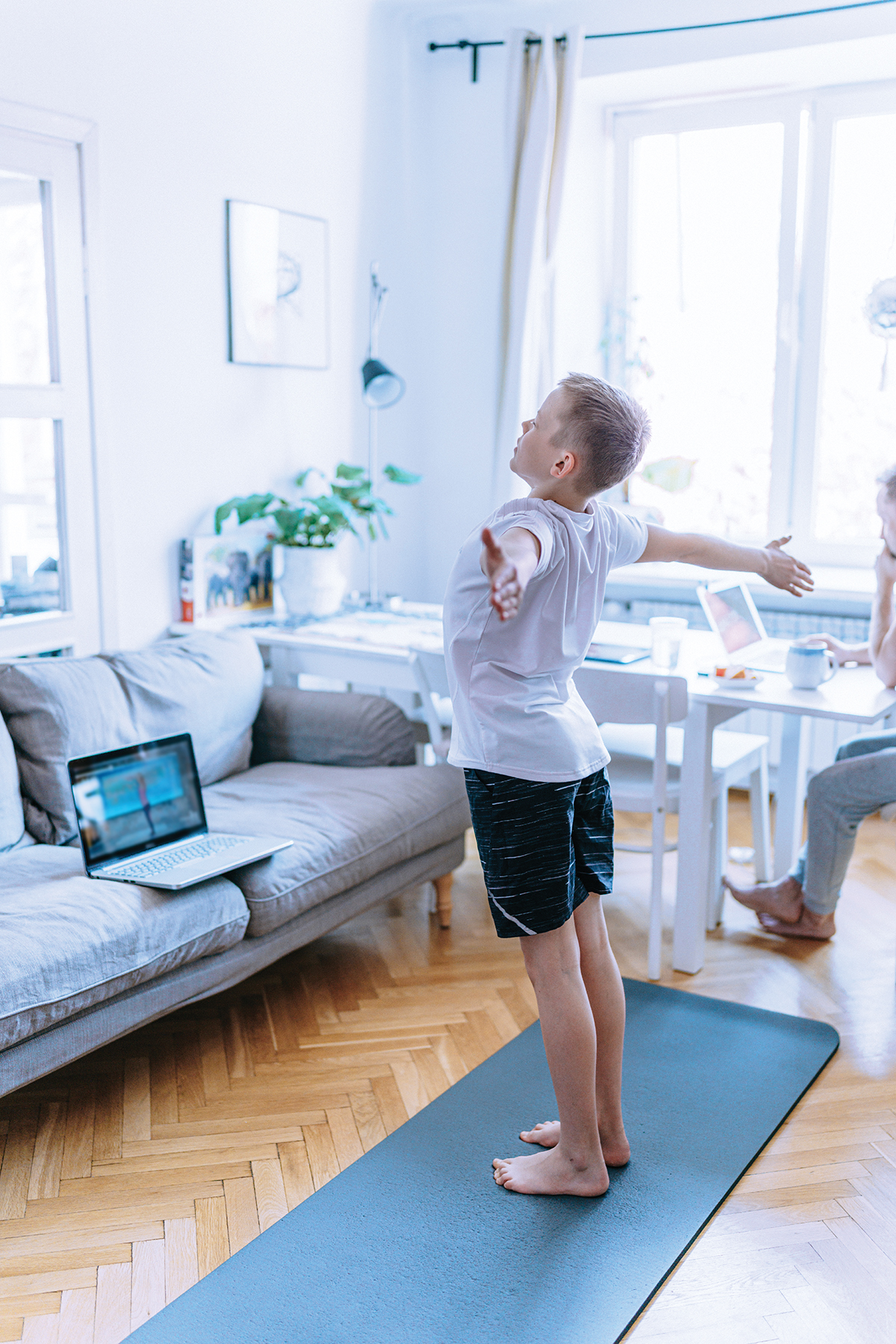
Teach kids to do easy stretches. After sitting for a while, have kids stand and pinch their shoulders together 10 to 15 times. Or have them try hip flexor stretches by kneeling, then extending the right leg in front of the body with the knee bent at a 90° angle and the foot flat on the floor. Kids should lean forward, pressing the left hip forward while keeping the right foot on the floor. Repeat on the other side.
Reduce backpack weight. Research shows that your child should keep backpacks at 10 to 15 percent of their weight. So, a 100-pound child should carry a maximum of 10 to 15 pounds in his or her backpack. Also, keep backpacks cinched up high, tight and snug to the body, not loose and pulling down on your child’s back, which alters posture, says Coulter.
Make sure kids work at a desk, not slouched on the bed or sofa. A good work station allows kids to put the screen at eye level and keep feet flat on the floor, with hips and knees at a 90-degree angle (or use a stool to support feet). Their back should be as far back into the back rest as possible to help support a neutral spine, says Coulter.
Have kids sit on a physio ball. This helps build core and trunk endurance and stability. Use it as a way for kids to take a quick break from a static seated position, says Coulter.
Encourage kids to mix it up when it comes to sports. Find a few different sports your child loves, which will allow them to use different muscle groups. This can reduce overuse injury risk and also helps kids become better athletes overall because they’re using different muscles, motions and skill sets, says Coulter.
WHEN TO SEE THE DOCTOR
Childhood orthopedic pain increases the risk of adult pain, so it’s important not to ignore your child’s complaints. It’s also best to be seen right away if your child is experiencing localized pain they can pinpoint to a certain spot, pain for more than a week, if your child is limping, or if it’s pain that disrupts your child’s sleep, says Thompson-Rogers.
In addition, ask your child’s doctor about a PT evaluation, which may identify weaknesses that can be improved with strengthening and stretching, says Thompson-Rogers.
The sooner kids start PT, the better, so they can learn to break bad orthopedic habits early on. “We don’t want acute pain to become chronic pain. The earlier you catch the pain and work on the underlying issues, you can change the habits that may be contributing,” says Coulter.
—Arricca Elin SanSone is a New York-based health and lifestyle writer.
Read More:
What the Social Media Ruling Against Meta and YouTube Means for Parents
Is Your Phone Getting in the Way of Connecting With Your Kids?

