

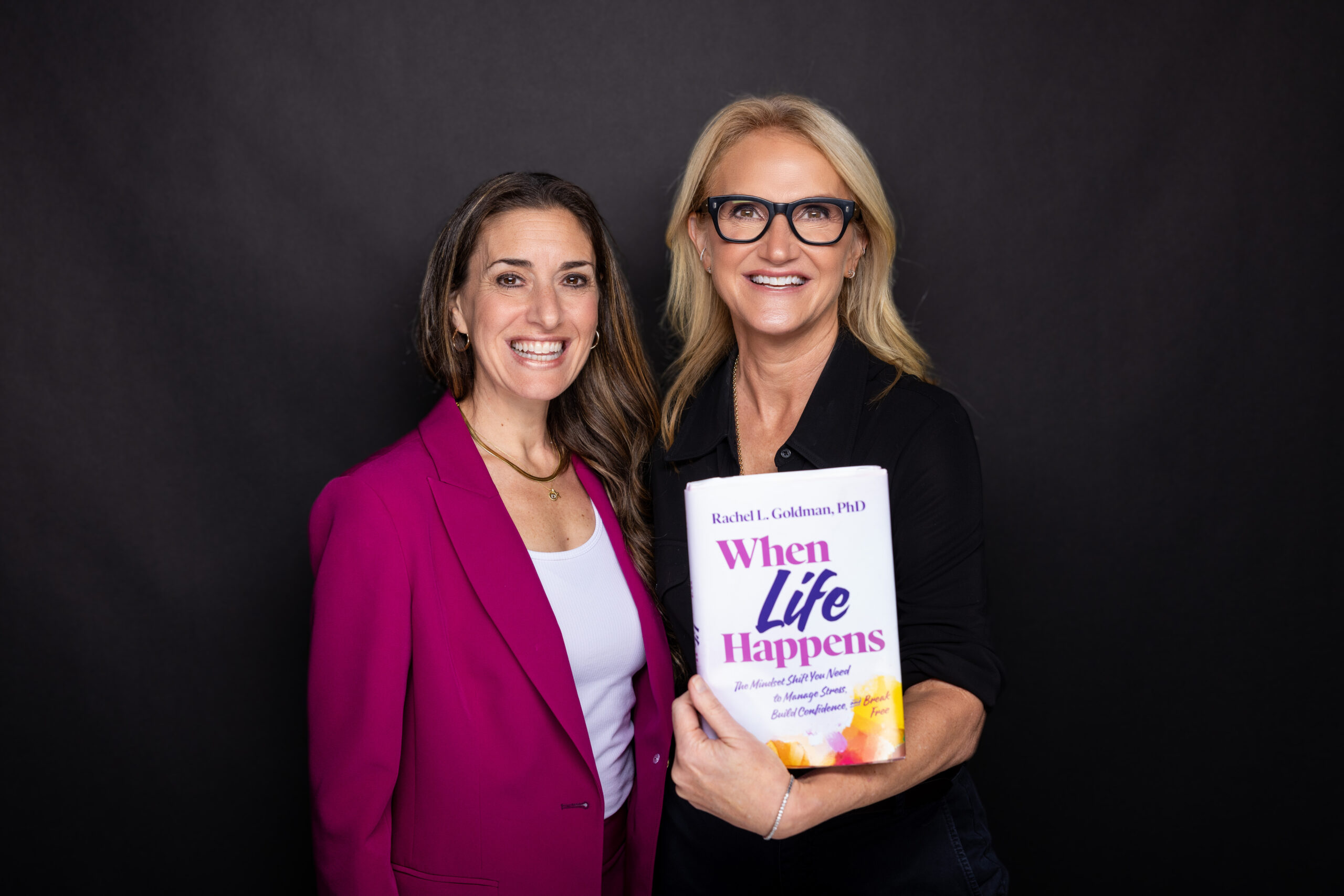
Stress is an unavoidable part of our lives, especially as moms juggling kids, work, schedules, health and the constant mental load of keeping everything running. But it may not be the stress in our lives as much as how we respond to it that has the biggest effect on our long-term health, even as many as 10 years later. That was a real “aha” takeaway for me when I heard Dr. Rachel Goldman speak at Let’s Talk Women’s Health and Wellness at NJPAC in Newark on March 14.
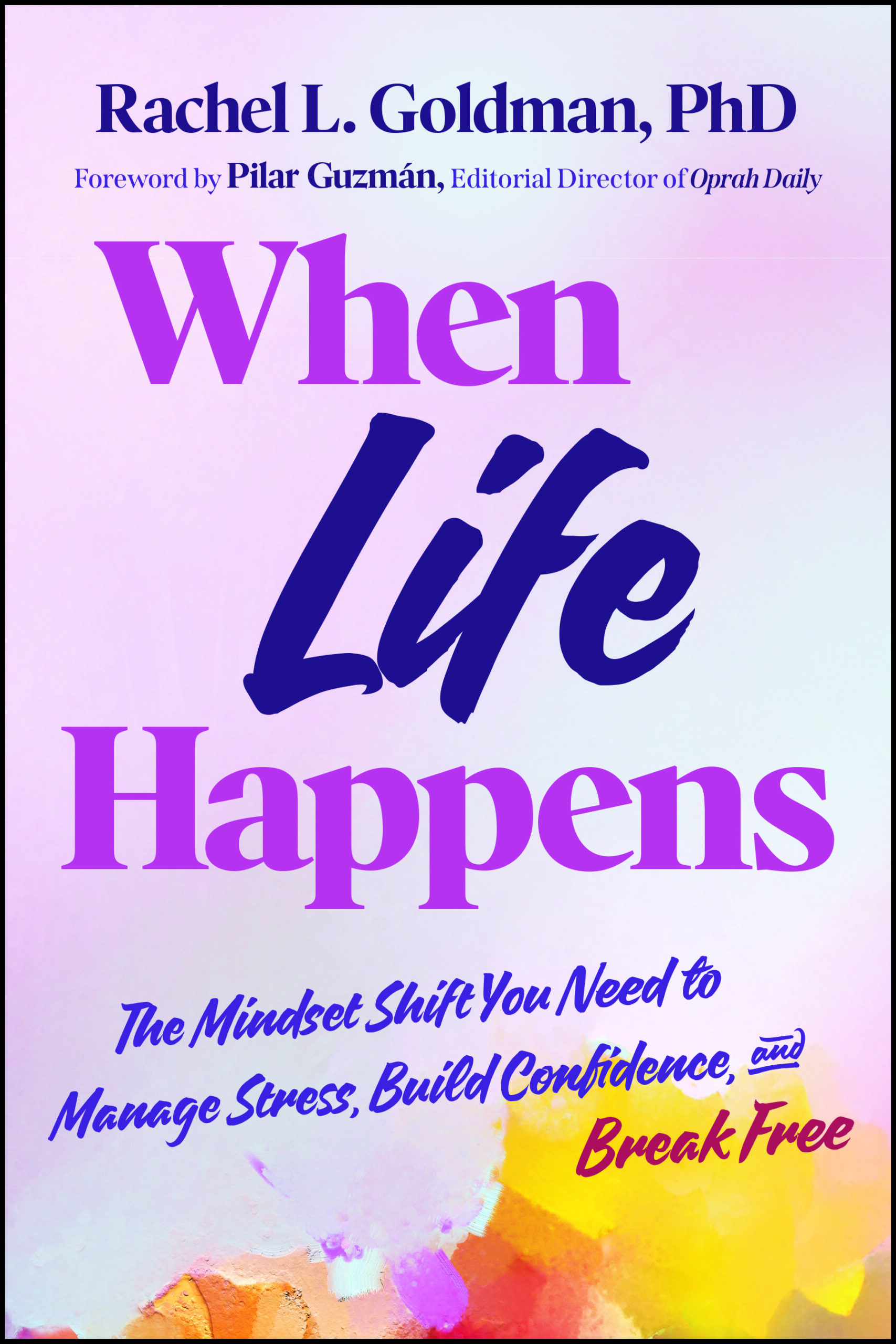
Dr Rachel was part of the keynote panel Radical Happiness: Reclaiming Joy as a Path to Wellness, and that takeaway about managing stress in a healthy way really stayed with me. It’s also part of her new book, just released today, When Life Happens: The Mindset Shift You Need to Manage Stress, Build Confidence, and Break Free. In it, Dr. Rachel explores how the patterns we fall into when life feels hard – things like overthinking, self-doubt, burnout, and overwhelm – can keep us stuck, and how small shifts in mindset can help us respond in healthier, more productive ways.
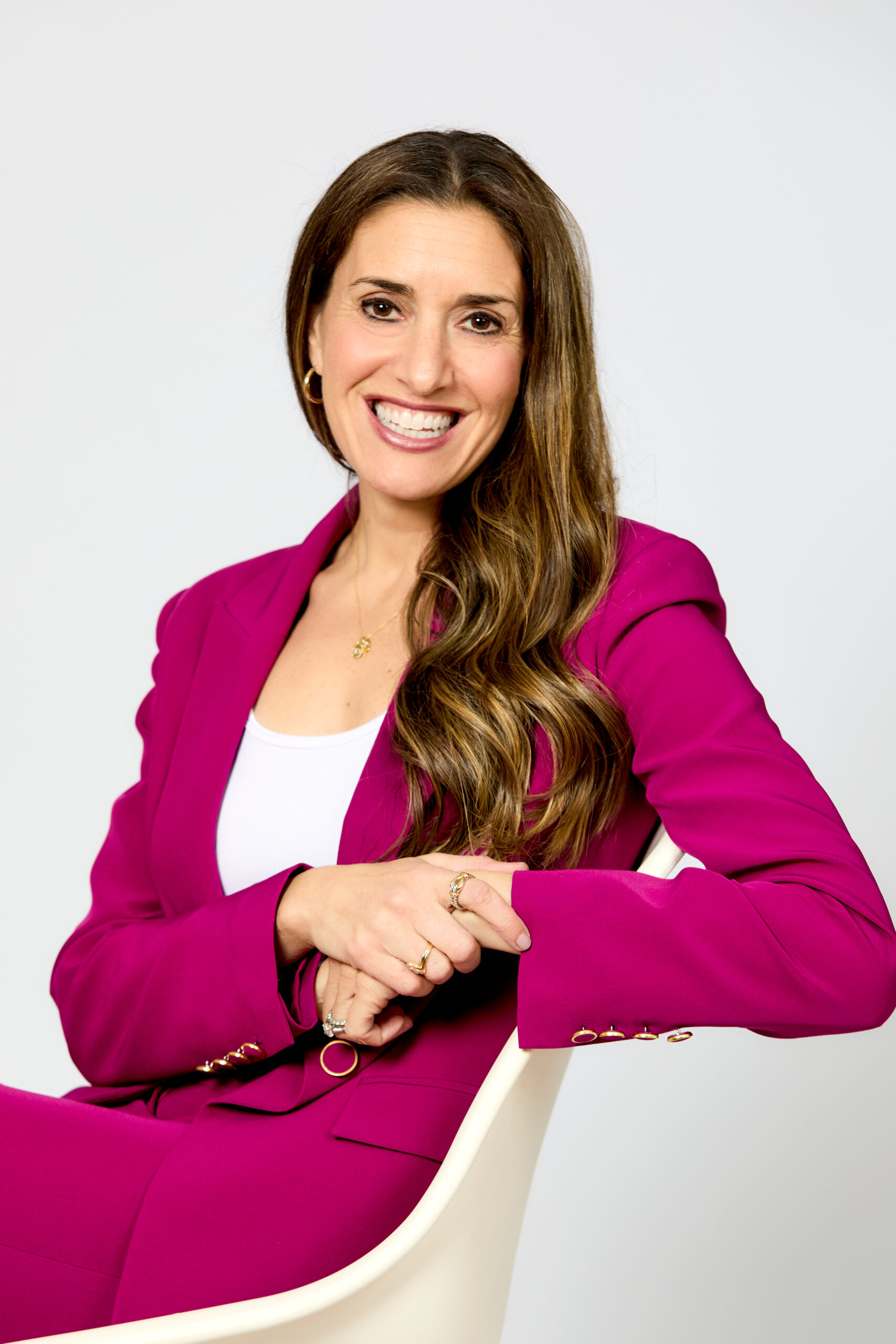
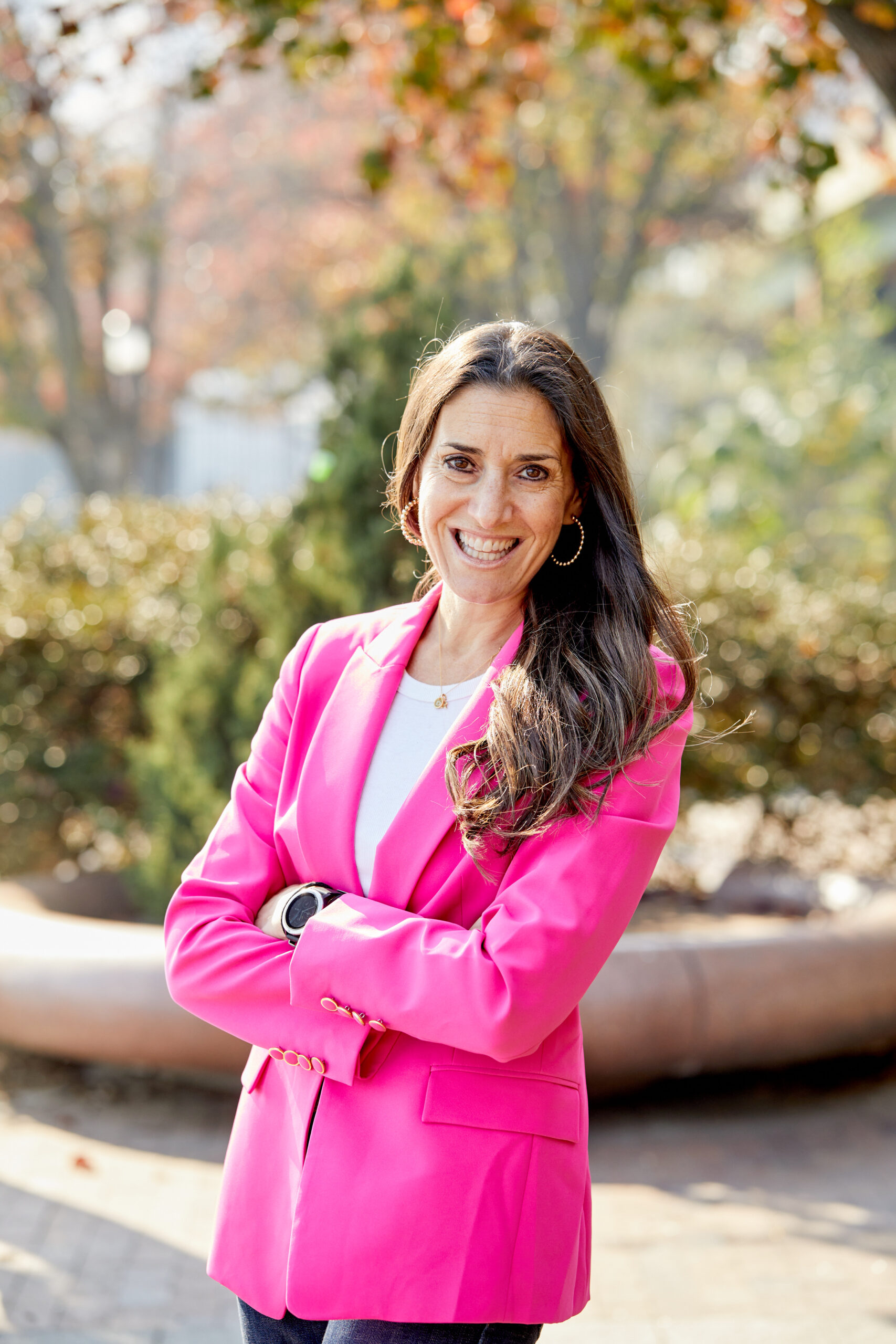
A nationally recognized clinical psychologist, speaker and consultant, Dr. Rachel is a Clinical Assistant Professor of Psychiatry at NYU Grossman School of Medicine and has a private practice in New York City. She has been featured in TIME, The New York Times, CNN and USA Today, and has appeared on major stages and podcasts, including events with Oprah and Reese Witherspoon and The Mel Robbins Podcast, where she just chatted about the new book.
When Life Happens is not about pretending stress can be removed from our lives. It’s about learning how to manage it differently, with tools rooted in cognitive behavioral therapy that can help us feel less stuck, more confident and better equipped for the hard parts of life.
For moms who are used to pushing through and putting themselves last, that message really hits. We asked Dr. Rachel about the inspiration behind the the book, why stress can quietly chip away at confidence, and the strategies we can start using right away when life feels heavy.
New Jersey Family: Your new book, When Life Happens, is all about managing stress, building confidence, and breaking free from the patterns that keep us stuck. What made you want to write this book now, and what do you hope readers take away from it?
Dr. Rachel: I wrote When Life Happens because I was seeing the same patterns come up again and again in my clinical practice—people feeling overwhelmed, stuck in cycles of stress and self-doubt, and unsure how to actually create change, or how to move forward. And honestly, it felt especially relevant right now, when so many of us are navigating constant uncertainty and pressure.
What I wanted to do with this book was to make cognitive behavioral therapy (CBT) more accessible. I also wanted to bridge the gap between knowing and doing. So many people know what they “should” do, and it’s one thing to understand why we feel the way we do, but it’s another to have practical, realistic tools to start using today that can shift those patterns in everyday life.
My hope is that readers walk away feeling both seen and empowered. I find that so many times people feel lonely on their journeys, and don’t have the confidence, or the tools, to move forward. My hope is that this book gives them the tools to better understand themselves with more compassion, but also feel equipped with evidence-based strategies to manage stress, build confidence, and respond differently when life inevitably throws challenges their way, because we know…Life Happens!
NJF: This book feels both practical and personal. How did your own experiences (both professionally and personally) inspire the message behind it?
Dr. Rachel: It really came from the intersection of both my clinical work and my own life. Professionally, I’ve spent years helping people navigate stress, self-doubt and behavior change, and I kept seeing how universal these patterns are—regardless of someone’s background or circumstances.
At the same time, I’m human, too. I’ve had my own moments of feeling overwhelmed, stuck, or pulled into unhelpful thought patterns. I’m a mom of two young kids, just trying to make it work like everyone else. Those experiences deepened my understanding of just how hard it can be to apply the tools we know “work” when we’re in it.
That’s what shaped the tone of the book. I wanted the book to be just like I provide therapy—I wanted it to feel relatable and honest, but also grounded in evidence-based strategies. It’s not about being perfect or having it all figured out, but it is about learning how to respond differently in those real-life moments when stress shows up.
Ultimately, the message is: you’re not alone in this, there’s nothing wrong with you, AND change is possible—with the right tools and a lot of self-compassion.
NJF: One of the ideas that really stands out is that it’s not just stress itself, but how we handle it over time, that can shape our health and future. Stress is a part of life and the way we manage it can have a deep impact on our health. What is the takeaway from this in terms of helping people better manage stress?
Dr. Rachel: That’s exactly it. As I mention in the book, stress itself isn’t the problem. It’s how we respond to it over time that really shapes our mental and physical health. And the hopeful part of that is that these responses are learned, which means they can be unlearned and then we can learn new ways that will work for us.
The biggest takeaway is that it’s never too late to build healthier ways of coping. No matter how long you’ve been stuck in a certain pattern, or doing something a certain way, whether that’s overthinking, avoiding, or being overly self-critical—you CAN learn tools to respond differently.
And the time to start is now. Small, consistent tweaks in how you manage stress can have a meaningful impact over time. It’s not about eliminating stress (because we all know that’s not going to happen!), but it is about changing your relationship with it so it doesn’t keep you stuck exactly where you are and feeling like there is nothing you can do about it.
That’s really the core message: you have more control than you think, and with the right strategies, you can start creating change at any point.
NJF: So many women, especially moms, are used to pushing through overwhelm and putting themselves last. What are some of the signs that stress is no longer just a busy-season feeling, but something that really needs to be addressed?
Dr. Rachel: A lot of women, especially moms, are used to pushing through, which actually makes it harder to recognize as it starts to feel “normal.”
Some of the early warning signs are when the stress stops feeling situational and starts feeling like a constant feeling. You might notice you’re always on edge, more irritable, or emotionally depleted, even when nothing major is happening. There can also be physical signs, such as difficulties sleeping (either falling asleep or staying asleep), headaches, changes in appetite, not enjoying things you used to enjoy, feeling like you just want to isolate yourself, or just feeling run down all the time.
Another big one is when your usual coping strategies stop working.
And importantly, when it starts impacting how you show up in your life—your relationships, your patience with your children, your ability to focus or enjoy things—those are all signs that it’s more than just a busy season.
The important message is that you don’t want to wait until you’re completely burned out, or in crisis, to address it. Those early signs are actually an opportunity to step in, reset, and start taking care of yourself in a more intentional way.
NJF: For readers who may not be familiar with cognitive behavioral tools, what are a few simple mindset shifts or strategies they can start using right away when life feels heavy?
Dr. Rachel: When life feels heavy, there are things you can do, by first focusing on what’s in your control. You can then use CBT tools to help gently shift how you think, feel, and respond—without needing a complete overhaul. A few simple strategies to start with are:
- Name that thought. Instead of getting stuck in our own thoughts, you can pause and remind yourself that this is just a thought. Thoughts are not facts—they are just thoughts!
- Examine the evidence, or check the thoughts. Now you can examine the evidence, or check the facts by asking yourself, “Is this thought 100% true, or is it my mind playing tricks on me to protect me?” Look for real evidence for and against the thought. This will help shift your thinking out of that spiral of worst-case scenarios.
- Take one small step. When everything feels overwhelming, everything, even the smallest thing, seems impossible. Break it down into the tiniest little thing that you actually can do right now. Small steps build momentum, increase a sense of accomplishment, and decrease that stuck feeling.
- Shift your focus. Even if it’s just for a few moments. Give your mind a break by doing something that will ground you. Maybe take a step outside, stretch a little or move your body, or just take a moment to breathe. This will help you pause and reset, so you are not acting out of emotion and then can respond to what is really going on.
- Talk to yourself like you would a friend, or loved one. This is such a great hack as most of the time we would never speak to ourselves the way we would speak to a friend or loved one. Try offering yourself the same supportive perspective you would give others.
NJF: One thing people struggle with is the way stress can quietly chip away at confidence. How are stress and self-belief connected, and what can someone do when they feel like they’ve lost trust in themselves?
Dr. Rachel: What many people don’t realize is that the mind-body connection is real, so when we are stressed, our brain automatically shifts into survival mode and wants to protect us. It scans for threats, which in today’s world, could be second-guessing decisions and comparisons, and instead of focusing on what could go right, it’s focusing on everything that could go wrong. Over time, that constant noise makes us question ourselves and believe that we can’t handle it, or we are making the wrong decision. This is when people start to feel like they’ve lost trust in themselves, and because we live in a fast-paced world that is constantly on the go, we don’t take the time to pause and realize this, but that’s what we need. It’s not that confidence is gone, it’s just now being drowned out by stress and overwhelming feelings. This is exactly why pausing and turning inward is so powerful.
Instead of immediately reacting or pushing through, take a moment to pause and check in. You can ask yourself some of the following reflection questions: What’s really going on right now? What do I need right now? What thoughts are coming up? Is this stress talking?
That pause creates space between you and the stress response, and then in that space, you can reset and reconnect with your own voice, your own values, your experiences, and your resilience.
An important reminder is that rebuilding self-trust isn’t built in big bold moves, but rather those small moments of reconnecting with yourself and showing up for yourself. With every pause, turning inward, and responding (instead of reacting), you are sending a signal to your brain that you are in control, you can trust yourself, and you got this!
NJF: For someone who feels stuck in negative thought patterns, overthinking, or self-doubt, what’s the first step toward breaking free and creating a healthier mindset?
Dr. Rachel: The first step isn’t to “fix” the thoughts, but rather to notice them. Before you can notice them though, you have to pause. That pause is so powerful, and honestly, is where the magic is. So often, these patterns are on autopilot. The thought comes, it feels true, so we react, before we even realize what’s actually happening. This is what keeps the cycle going.
When we pause, even for just a moment, you break that cycle and create space to turn inward in order to understand what’s happening.
That moment of awareness can lead to change. Breaking free isn’t about perfect thinking, as we know there’s no perfect, but it starts with a pause, awareness, and a willingness to look inward.
NJF: For a woman reading this who feels overwhelmed, emotionally drained, or like she has lost a little bit of herself, what is one small thing she can do today to feel more grounded, more confident, and more in control?
Dr. Rachel: If you’re feeling overwhelmed, drained, and a little disconnected from yourself, your goal isn’t to do more. It’s to come back to yourself in a small, intentional way, and to be kind to yourself in doing so. There’s enough pressure on us already to be doing more, so instead, start with a pause and check-in. Ask yourself, what do I need right now? Not what anyone else needs, but what is it that you need? And then listen! Choose one tiny action to take now. Maybe that’s taking a sip of water, taking a breath, taking a moment to step outside, or even sending the email you’ve been avoiding. This may seem small, but that one step is you taking the time you need for you, which then signals to your brain that you are also important. And by doing this, and caring for your own needs, you will be better able to show up for yourself, and others.
Read More:
8 Things Every Woman Needs to Know to Protect Her Heart Health
What a Yale Student from New Providence Learned Helping Her Mom Through Cancer
5 Actionable Ways to Take Charge of Your Health as a Busy Mom

