

Casey Arias remembers feeling deeply unsettled after finishing her spring semester at Yale
University last May. A month earlier, her mom had mentioned that she felt a little off, but wasn’t overly concerned and planned to follow up with her doctor. Arias kept checking in during finals week, asking about appointments and test results, but the answers she got were vague.
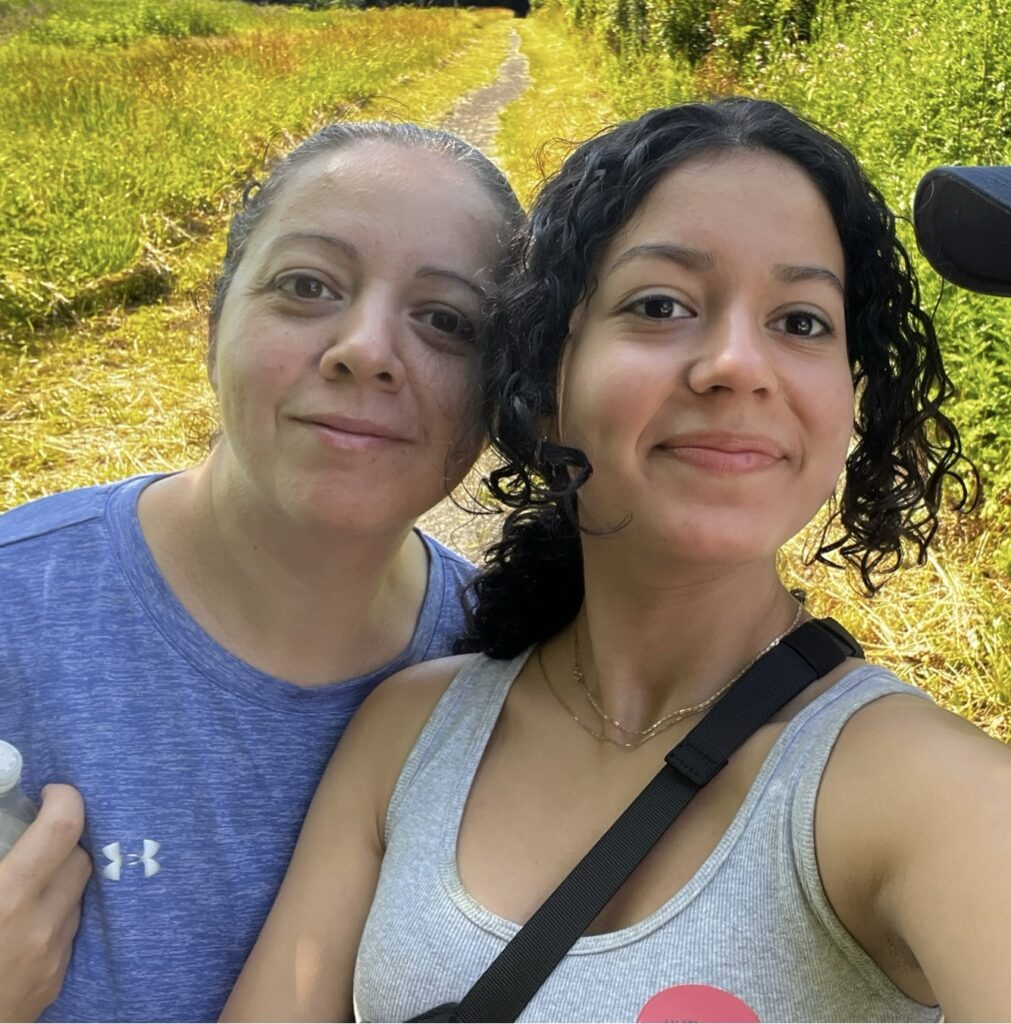
When Arias came home and pressed again, her worst fears were confirmed. Her mom had breast cancer. “You hear cancer and you just assume the worst,” she says. “At least I did.”
Doctors told her mom it was an aggressive form of breast cancer, but more testing was needed to determine how far it had spread. Compounding the overwhelm was the fact that her mom had no health insurance. “What her doctor was telling her was, ‘I don’t really see the point in ordering these tests. You don’t have insurance,’” she says.
Another doctor even suggested that if her mother, who doesn’t speak English, wasn’t
comfortable with treatment options, she could return to her home country. “That was really
devastating to hear,” Arias says. Her parents are originally from Costa Rica, though Arias was born in the United States. “Especially coming from someone in healthcare who is supposed to help you.”
That was the moment Arias knew she had to step in and take the lead to advocate for her
mother’s care. Fortunately, Arias was able to get her mom health insurance right away and
luckily, her mom’s friend knew someone with deep connections to the cancer community. That someone turned out to be Deb Belfatto, a two-time breast cancer survivor and founder of Let’s Talk Women’s Health & Wellness, a nonprofit dedicated to educating and empowering women to prioritize their health and wellness. Belfatto quickly connected the family with doctors at Atlantic Health System at Overlook Medical Center in Summit.
With a strong medical team in place, Arias’s mom had surgery, a successful course of
chemotherapy and radiation. Today, she is in remission.
Arias’s experience advocating for her mom is being shared as part of Let’s Talk Women’s Health & Wellness’ Booming Voices initiative. The goal is to amplify women’s stories to help others feel less alone and better equipped to advocate for their own health. That’s also the goal of Let’s Talk’s annual symposium on March 14 at NJPAC in Newark. The ultimate self-care day for women who all too often feel stretched thin, Let’s Talk’s mission is to empower women to make their own health a priority while also making women’s health a national priority.
Looking back on the past year, Arias says her experience advocating for her mom’s care changed how she sees healthcare and how important it is to have someone advocating for you. It’s especially crucial when language or cultural barriers make an already complicated health system even harder to navigate.
Here are the lessons Arias learned from her own advocacy that she hopes help others going
through a similar journey:
Trust your instincts and don’t be afraid to push back
One of the biggest realizations Arias has made is that patients and families should trust their instincts when something doesn’t feel right. Most of us hesitate to question doctors because we assume medical professionals know best, she says, but Arias says her family’s experience showed her how important it is to speak up.
“I would rather be the squeaky wheel,” she says. “If it feels not right, what a doctor is telling you, move on to another one. It can feel scary to do that, but in the long run it’s so worth it.” In their case, pushing for different care led them to a new medical team and a doctor who treated her mother with respect and compassion.
The right support inside the healthcare system you’re a part of makes a huge difference
Throughout her mom’s cancer journey, Arias says one of the most valuable resources was a nurse navigator, someone who helps coordinate appointments and manage the many moving parts of cancer care.
“As involved as I want to be, I don’t have all the information,” Arias says. “That’s not the same as someone who’s in the field. There were so many appointments and so many decisions. Having someone there who understands how everything works really helped.”
Language barriers make advocacy even more important
Because English is not her mom’s first language, Arias made it a priority to go to every
appointment with her. Even when hospitals provided translators through virtual interpretation services, Arias says important details were sometimes lost in translation.
“There were times where my mom would say something and I’d hear the translator and think, ‘That’s not what she said.’” She also noticed that language barriers sometimes led doctors to underestimate her mother. “People would say things like, ‘You don’t understand what’s happening,’” Arias says. “But it’s her body. She does understand what she’s going through.”
Her advice for families facing similar challenges is to ask someone they trust whenever possible to translate, advocate and support them during appointments. “Don’t feel like a burden ever,” she says. “It’s way more important to get the care you need.”
Even without a language barrier, medical tests can feel confusing and overwhelming. At one point during her mom’s treatment, scans revealed areas doctors said needed more investigation. When the results arrived, Arias’s mother believed they showed that the cancer had spread to her kidney.
“She told me really sadly, ‘They found it in my kidney.’” But when Arias reviewed the report, she realized the results had been misread and the suspicious areas had actually come back clear. “She read the results wrong,” Arias says. “It made me realize how important it is for someone to go over those things carefully.”
No one should face cancer alone
The biggest lesson Arias learned advocating for her mom is that no one should ever go through cancer alone. One thing she remembers from long days at the hospital was seeing patients sitting alone during chemotherapy. “It would break my heart,” she says.
That’s why Arias feels so strongly about being able to help others facing the same challenges. Whether by helping translate for someone at an appointment or spending the day with someone during a chemotherapy infusion, she is committed to doing whatever she can to help make sure patients facing similar barriers don’t go through cancer alone.
Let’s Talk Women’s Health & Wellness will be held on March 14 at NJPAC in
Newark. For more information about the symposium and to get 30 percent
off tickets, use promo code NJFAMILY30.
Read More:
5 Actionable Ways to Take Charge of Your Health as a Busy Mom
Let’s Talk: NJ Activist Deb Belfatto is on a Mission to Boost Women’s Wellness

