



The last time I visited the beach, I sat near the water and found myself fascinated by a group of young children playing in the sand. They were complete strangers, yet within minutes, they had initiated a massive, impromptu construction project. One child started digging a moat; another began stacking wet sand for a towering fortress; a few others were fiercely dedicated to digging a hole to the center of the universe.
Without a manager, a syllabus, or a designated leader, they communicated flawlessly. They negotiated roles, shared tools, and adapted organically when a rogue wave washed away a wall.
I see this same magic when young kids play neighborhood pickup basketball or street kickball. Children possess a natural, uninhibited ability to collaborate. They aren’t afraid to speak up, they intuitively understand teamwork, and they naturally gravitate toward common goals.
But then, something shifts.
When Building in the Sand is Replaced by the Smartphone
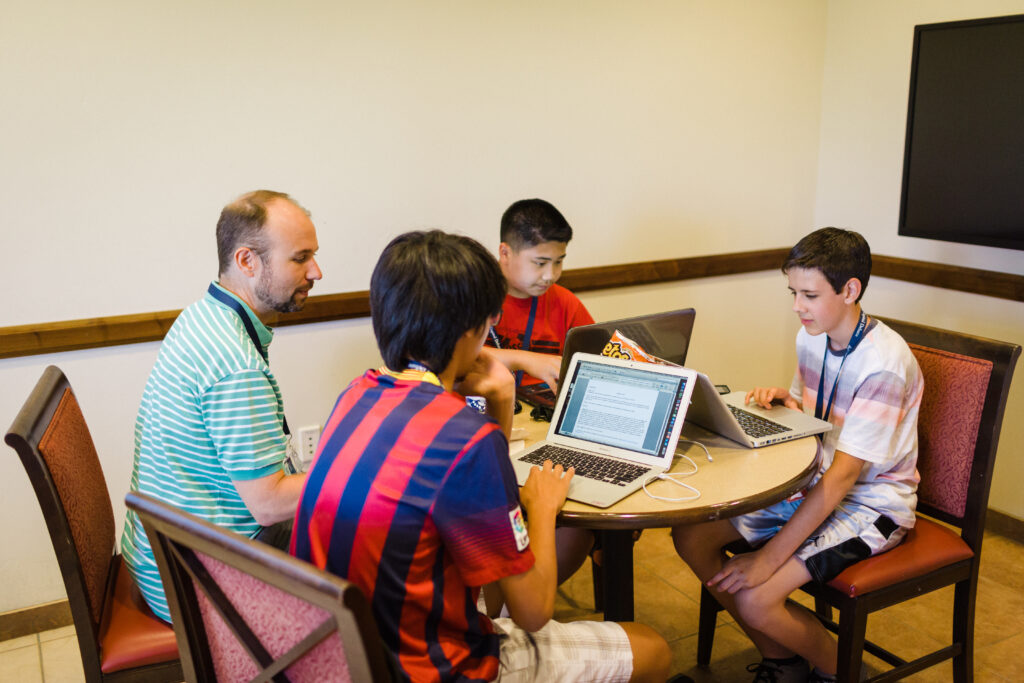
Sometime around the transition into middle school, this beautiful, organic ability to communicate begins to fracture. As children become teenagers, their educational and social landscapes demand hyper-individualism. Success becomes measured by solitary grades, standardized test scores, and personal social media metrics. Driven by the fear of peer judgment, they retreat. They begin to separate, isolating themselves in digital silos. Playing in the sand is replaced by staring at a smartphone, and that fearless instinct to collaborate is lost. They stop listening to understand, and start listening only to reply.
Why Human Skills Matter in an AI World
For parents, it is easy to write this off as a typical, awkward teenage phase. But as we stand on the precipice of a rapidly shifting professional landscape, we can no longer afford to ignore it. We are entering an era dominated by Artificial Intelligence. In a future where AI can instantly write code, draft essays, and analyze complex datasets, the technical skills we heavily prioritize today will become standard commodities.
So, what will make our children stand out? The answer lies in uniquely human traits: high-level interpersonal communication, empathy, and collaborative problem-solving. In the AI-driven workforce of tomorrow, survival and success will belong almost exclusively to the communicators.
Rebuilding the Instinct to Collaborate
This is the exact crisis we tackle every single day at Capitol Debate. We run public speaking and debate camps on college campuses across the United States. While parents often enroll their teens hoping to improve their individual presentation skills, our underlying mission is also focused on communication in teamwork. We deliberately weave team building and leadership into our curriculum every single day, because we view these skills as part and parcel of being a successful communicator and speaker in the new world.
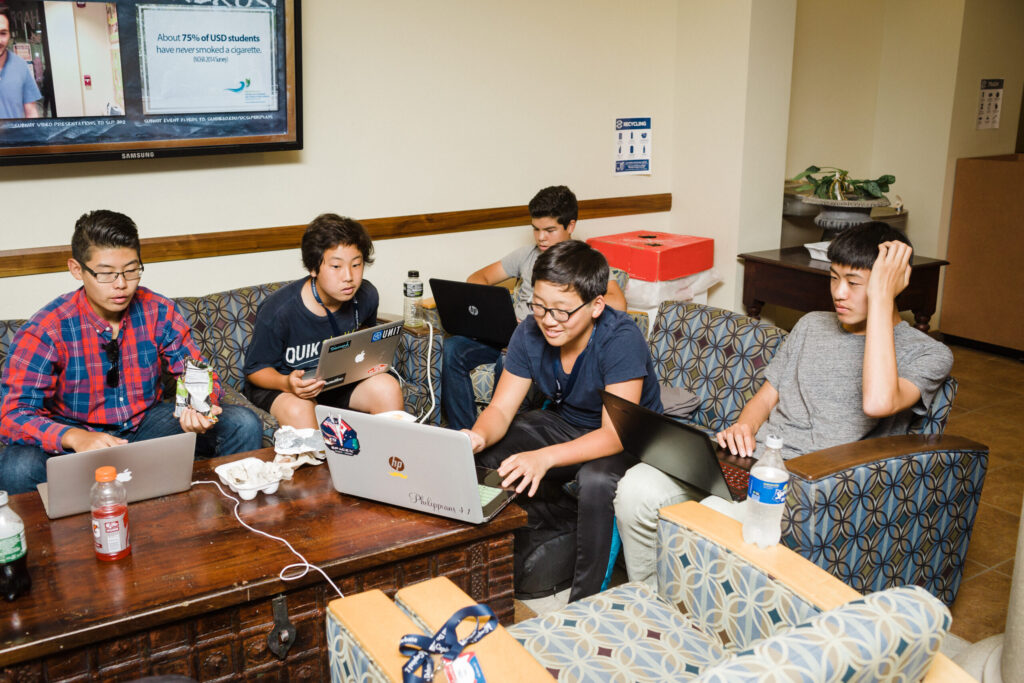
At Capitol Debate, we don’t just hope kids figure out how to work together. In our classrooms, students don’t just practice their own speeches and sit down. They work together to make each other better. One student speaks while teammates take on specific coaching roles—one watches body language, another listens for argument structure, another evaluates delivery. Then they huddle up and give each other targeted feedback before the next round. The speaker improves because the team invested in them. The coaches improve because they had to listen at a level most people never practice. Everyone walks away sharper, and they walk away understanding something crucial: your success is connected to the people around you.
Leadership Through Communication
We reinforce that lesson every day through structured team building and leadership exercises. In one challenge, a blindfolded student navigates an obstacle course guided only by a teammate’s voice, while a third teammate coaches the pair on communicating more precisely. Everyone rotates through every role. The lesson is immediate: your words carry real consequences, clarity matters more than volume, and a team only works when each person trusts the others to do their part. It’s the same dynamic those kids on the beach had naturally—practiced deliberately so teenagers can get it back.
We work on conflict resolution, goal setting, and perseverance—all through the lens of how you communicate within a group. How do you disagree without shutting someone down? How do you set a shared goal everyone commits to? How do you lift up a teammate who’s struggling instead of leaving them behind? These are leadership questions, and they’re all answered through better communication.
What True Success Looks Like
Parents often ask me what makes a young person successful. I’ve watched thousands of students come through our programs. The ones who thrive aren’t the loudest or most naturally gifted. They’re the ones who learned that their job isn’t just to be good—it’s to make the people around them good. They set common goals. They understand they’re only as strong as their weakest link. They listen, they respect perspectives they disagree with, and they let someone else lead when it’s their turn.
We cannot expect our teens to automatically know how to navigate the complex social and professional challenges of the future without guidance. They need spaces outside the high-stakes pressures of standard academics to practice looking someone in the eye, listening deeply, and building something together.
When we prioritize these foundational communication skills, we aren’t just helping them survive the awkwardness of adolescence. We are giving them the critical tools they need to thrive, lead, and connect in a world that desperately needs their human voices. It is time we help them get back to building things together.
 Ron Bratt is the owner of Capitol Debate. He has given his life to developing debate skills in children because he has seen how it enhances their intellectual growth. He has been involved in creating high school debate and college debate programs to help students learn practical skills that will benefit and enrich their lives.
Ron Bratt established the Catholic University Debate program in 1998, leading the team to multiple national titles during his 6-year tenure. Additionally, he played a pivotal role in forming the Urban Debate League in Washington, D.C., and collaborated with the International Debate Educational Association to bring students from Europe and seven other countries for leadership and debate training in the U.S.
In 2006, Ron Bratt established Capitol Debate with a vision to empower young individuals to find their voice and drive change in both their lives and the broader world. Since its inception, he has successfully expanded the program to over 15 cities, including notable locations like Princeton, Philadelphia, Washington, D.C., Boston, San Diego, the Bay Area, and Seattle.
Beyond Capitol Debate, Ron has made significant contributions as a commentator on national political debates. He was notably featured in Washingtonian Magazine in the run-up to the 2012 presidential debates between President Barack Obama and challenger Mitt Romney. Throughout his diverse endeavors, Ron has steadfastly adhered to his fundamental belief in the power of debate to foster Navigating College Admissions: The Vital Role of Public Speaking and Debate academic and social growth in young people.
Read More:
Starting Public Speaking and Debate Early: Why Your Child Can’t Afford to Wait
Critical Thinking: The Essential Shield Against Misinformation For Kids and Teens
The Critical Importance of Interpersonal Skills for Kids and Teens
The Necessity of Debate for Kids in the Age of Artificial Intelligence
Navigating College Admissions: The Vital Role of Public Speaking and Debate
Empathy, Open-Mindedness, and Debate: Unlocking the Keys to Success in a Complex World

