



It is 3:30 pm. The car door slams. You ask, “How was your day?” You want stories; you get the one word that haunts parents everywhere:
“Fine.”
If this feels familiar, you aren’t alone. At Capitol Debate, we’ve spent 20 years working with over 10,000 students. We see bright kids who can debate foreign policy but struggle to tell their parents what’s on their minds.
It’s easy to interpret this silence as rejection. However, the shutdown is rarely about you—it’s about the complex neurological and social transition they are navigating. Fortunately, we don’t have to simply endure the silence; there are proven ways to better understand your child and help them feel comfortable communicating.
The Science of Silence
To change the dynamic, we first need to understand the “why.”
The “After-School Collapse”
Imagine sitting at a hard desk for seven hours, pivoting from the French Revolution to Calculus while navigating the social minefield of the cafeteria. By 3:30 PM, your teen is neurologically overloaded. Asking “How was your day?” demands they synthesize complex data when they have zero bandwidth left. Unlike adults, who can effortlessly summarize a day’s events, a teen’s developing brain finds this type of high-level synthesis incredibly difficult. “Fine” isn’t a dismissal; it’s energy conservation.
Fear of Negative Response
Teens analyze their audience. They often stop sharing because they fear a “judgmental” response—whether that’s disappointment or excessive worry. To avoid the risk of a reaction, they avoid the topic entirely.
The Quest for Autonomy
A teenager’s job is “individuation”—separating their identity from yours. Withholding details is a way of saying, “This life belongs to me.”
Strategies That Make a Difference
At Capitol Debate, we teach that communication is about connection. Here are three pivots to try:
- Observation Over Interrogation
Broad questions feel like demands for data. Instead, validate their world without prying.Instead of: “Did you get your work done?”
Try: “I know you handed in that big paper today. That must be a huge weight off your shoulders.”
This signals you are on their team. If they want to talk, they will. If not, they feel seen, not grilled.
- The Power of Shared Activity
Eye contact can feel like an interrogation. We have found the best conversations happen “side-by-side”—in the car, walking the dog, or playing ping pong. When hands are busy and eyes are averted, the pressure drops, and defenses come down. - Listen to Understand, Not to Fix
When your teen vents, the parental instinct is to solve. But immediate advice feels like a rebuttal. Resist the “fix-it” reflex. Simply acknowledging their perspective (“That sounds incredibly frustrating”) creates a safe space where they don’t fear a lecture.
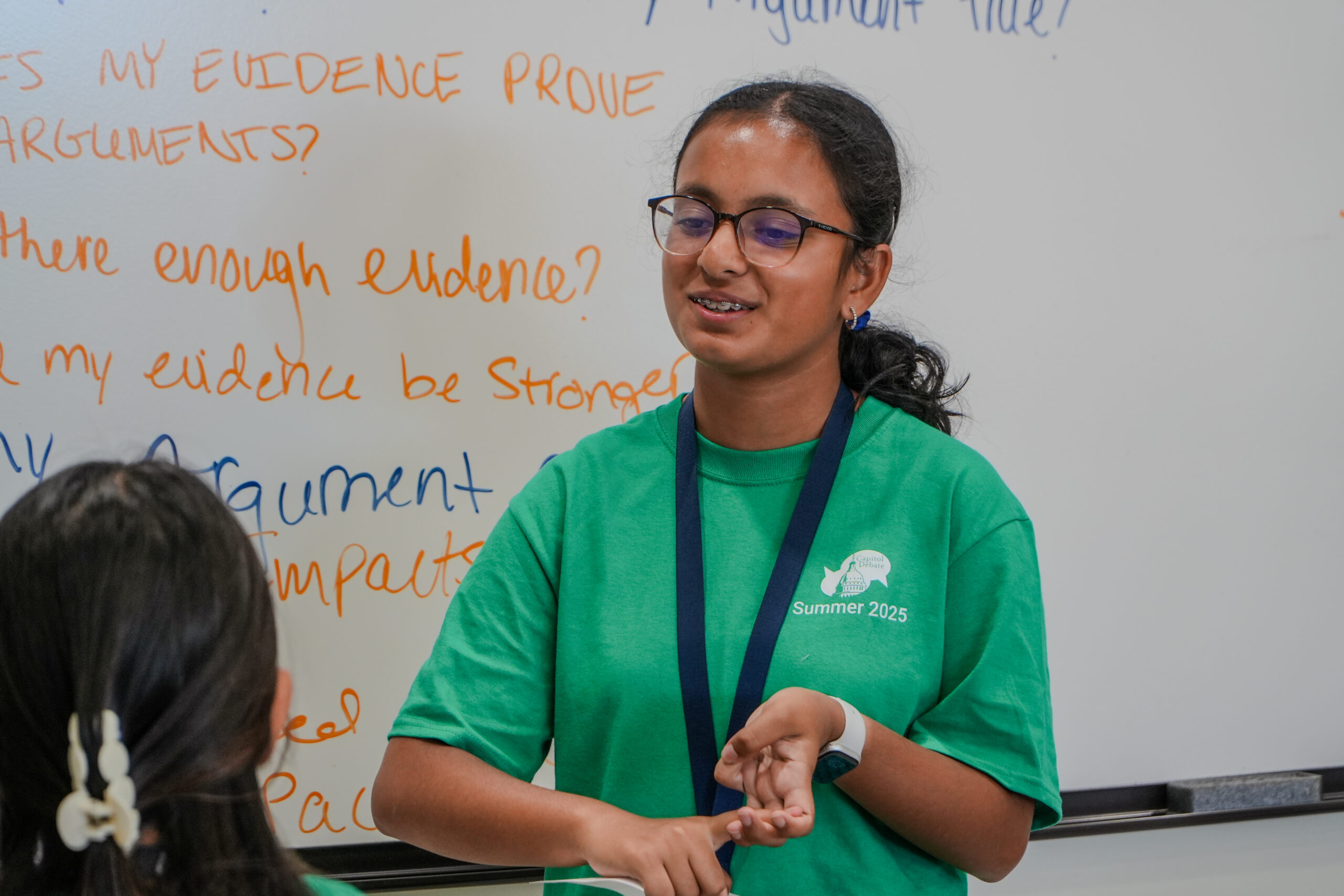
Building Confidence: The Capitol Debate Difference
While your approach matters, the biggest barrier is often confidence. Many teens retreat into “fine” because they lack the tools to articulate complex emotions.
At Capitol Debate, our summer camps go beyond trophies to teach essential interpersonal skills:
- Organization: Structuring thoughts to clearly explain feelings.
- Resilience: Listening to opposing views without taking them personally.
- Safety: Realizing that their voice matters.
When a child realizes, “I can explain myself clearly, and people will listen,” they stop hiding behind one-word answers.
The Next Step
The transition to a quiet teen is a challenge, but also an invitation to build a relationship based on respect and curiosity. This summer, give your child the tools to express themselves.
Ready to help your child find their voice? Visit capitoldebate.com to learn more about our summer camps and workshops.
Capitol Debate offers comprehensive summer programs at prestigious university campuses nationwide, with a specialized curriculum designed for students ages 11-17. Our expert instructors create an engaging, supportive environment where students don’t just learn debate techniques—they discover their voice and develop skills for lifelong success.
 Ron Bratt is the owner of Capitol Debate. He has given his life to developing debate skills in children because he has seen how it enhances their intellectual growth. He has been involved in creating high school debate and college debate programs to help students learn practical skills that will benefit and enrich their lives.
Ron Bratt established the Catholic University Debate program in 1998, leading the team to multiple national titles during his 6-year tenure. Additionally, he played a pivotal role in forming the Urban Debate League in Washington, D.C., and collaborated with the International Debate Educational Association to bring students from Europe and seven other countries for leadership and debate training in the U.S.
In 2006, Ron Bratt established Capitol Debate with a vision to empower young individuals to find their voice and drive change in both their lives and the broader world. Since its inception, he has successfully expanded the program to over 15 cities, including notable locations like Princeton, Philadelphia, Washington, D.C., Boston, San Diego, the Bay Area, and Seattle.
Beyond Capitol Debate, Ron has made significant contributions as a commentator on national political debates. He was notably featured in Washingtonian Magazine in the run-up to the 2012 presidential debates between President Barack Obama and challenger Mitt Romney. Throughout his diverse endeavors, Ron has steadfastly adhered to his fundamental belief in the power of debate to foster Navigating College Admissions: The Vital Role of Public Speaking and Debate academic and social growth in young people.
Read More:
Starting Public Speaking and Debate Early: Why Your Child Can’t Afford to Wait
Critical Thinking: The Essential Shield Against Misinformation For Kids and Teens
The Critical Importance of Interpersonal Skills for Kids and Teens
The Necessity of Debate for Kids in the Age of Artificial Intelligence
Navigating College Admissions: The Vital Role of Public Speaking and Debate
Empathy, Open-Mindedness, and Debate: Unlocking the Keys to Success in a Complex World

